
The International Criminal Court’s Decision on Netanyahu and Its Possible Consequences
6 min read
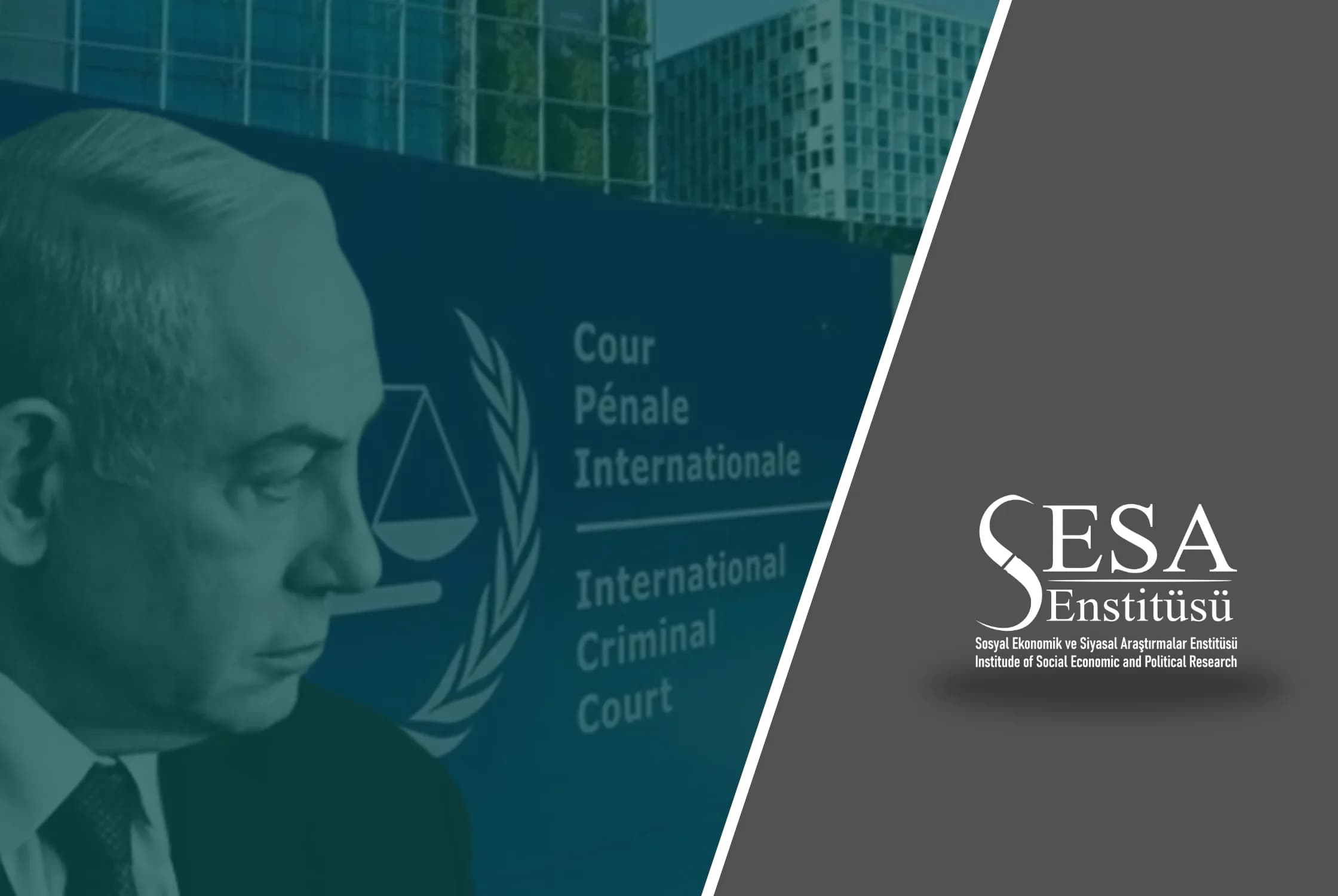
In a significant development in the context of the Israeli attacks on Gaza, the International Criminal Court has issued arrest warrants for Israeli Prime Minister Benjamin Netanyahu and Defence Minister Yoav Gallant. This decision, issued at a time when humanitarian violations against Palestinians are continuing…
In a significant development in the context of the Israeli attacks on Gaza, the International Criminal Court has issued arrest warrants for Israeli Prime Minister Benjamin Netanyahu and Defence Minister Yoav Gallant. This decision, issued at a time when humanitarian violations against Palestinians are continuing, has raised many questions about the role of international justice and the rebuilding of trust in the human rights system. It is clear, however, that the questions of whether this decision will be enough to change the painful reality experienced by Palestinians in Gaza and the West Bank, and whether it may mark the beginning of a new era in holding those responsible for international crimes to account, will remain on the agenda.
In connection with the decision, but also independently of it, it must be emphasised that the international community should insist on every platform that Netanyahu and Gallant be tried for the crimes they have committed against humanity. Under international humanitarian law, these crimes are classified as “war crimes, crimes against humanity and genocide”. Although the International Criminal Court has previously taken decisions concerning other individuals in relation to similar crimes, the decision taken this time against senior Israeli leaders reflects a shift towards holding those responsible for grave violations to account.
The Difference between the International Criminal Court and the International Court of Justice
It is important to understand the differences between the International Criminal Court and the International Court of Justice. While the former tries individuals who commit international crimes such as genocide, war crimes and crimes against humanity, the latter deals with legal matters between states. In this context, the Republic of South Africa had applied to the International Court of Justice regarding Israel on account of human rights violations. The arrest warrants issued by the International Criminal Court for Netanyahu and Gallant, however, are an important step in the sense of holding the individuals who commit crimes directly responsible, and demonstrate a real transformation in the prosecution of international crimes against individuals.
The International Criminal Court (ICC) is the first permanent international criminal court and is located in The Hague in the Netherlands. Unlike the International Court of Justice, it is an independent international organisation, and 124 members are directly parties to the Rome Statute, which established the International Criminal Court.[1] Of these, 33 are African States, 19 are Asia-Pacific States, 19 are from Eastern Europe, 28 are from Latin American and Caribbean States, and 25 are from Western European and other States.
The Justice of the Palestinian Cause
The Palestinian cause is regarded as one of the greatest humanitarian crises of the modern age. The Palestinian people are a people whose fundamental rights are constantly violated. Israel’s policies of occupation, the destruction of infrastructure, the demolition of homes and the forced displacement of people have further worsened the humanitarian situation on the ground. This has made the Palestinian question one of the most urgent problems to be solved on a global scale.
The decision of the International Criminal Court could be a great boost to the morale of Palestinians and strengthen their position in their struggle for justice and freedom. At the same time, it sends the global community the message that leaders involved in human rights violations must be held responsible. It is particularly significant that such a decision has been taken against Israel.
The Significance of This Decision in the Face of International Silence
Although there are many documents, records and reports documented internationally concerning Israel’s violations against Palestinians, there has been a long-standing international silence. Global powers, particularly the United States, the United Kingdom and some European Union countries, have continuously supported Israel. The arrest warrants issued by the International Criminal Court for Netanyahu and Gallant, however, may be a turning point in this respect, and we hope that the international community will begin to take steps to punish those responsible for crimes against humanity. This decision may signal a transition to a new phase of international attention to the Palestinian cause.
Can the Human Rights System Regain Trust?
In recent years, trust in the human rights system has declined, particularly with regard to the Palestinian question. Although the genocide and massacres committed against Palestinians have been brought to the attention of the international community, justice has very often not been done. The decision of the International Criminal Court may revive hope that justice will be done, but there are also many questions about how this decision will be implemented in practice. Will the States Parties to the Rome Statute take concrete steps to implement this decision effectively? Will there be a development that changes the support that global powers give to Israel?
The Impact of the Decision on Its International Dimensions
The arrest warrants issued by the International Criminal Court for Netanyahu and Gallant send a strong message that the principle of the rule of law will apply to those responsible for human rights violations. This decision may create international pressure on Israel and cause some countries to review their relations with Israel. For example, many European countries such as France, Germany and the United Kingdom have supported the Court’s decision, which reflects a changing attitude in their support for Israel. At the same time, however, this decision may meet with fierce opposition from some countries such as the US, because the US continues to give Israel unlimited support in every field.
The Link between the Situation in Palestine and the Situation in Lebanon
These violations are not limited to Gaza and the West Bank; they are also spreading to Lebanon. The systematic attacks on the civilian population in Gaza, the air strikes on hospitals and medical facilities and the destruction of infrastructure bear strong similarities to the situation in Lebanon. In both contexts, the civilian population, journalists and health workers have been targeted. The United Nations peacekeeping force has also suffered from Israel’s crimes, and valuable heritage such as the environment and historic sites has suffered great damage. In the war in Gaza, the attacks on historic cultural heritage raise questions as to whether Israel aims to erase the memory of Palestine and Lebanon.
Open Questions
This situation has raised many questions. First of all, is it possible for the Court’s decision really to change Israel’s policies? How will the international community respond to Palestinians’ demands for justice? How will this decision affect the future of the conflicts in Palestine, Lebanon and across the region? Will this decision lead to perpetrators being held to account in other conflict zones as well?
The arrest warrants issued by the International Criminal Court for Netanyahu and Gallant, although they have come late, are a new source of hope for the peoples of Palestine, Lebanon and the whole world. Although there is still a long way to go, this step may be the beginning of the prosecution of those responsible for crimes against humanity. If this decision is used correctly, it may be a turning point on the road to achieving peace and justice in the region. In conclusion, justice delayed is better than justice denied.
Dr Gülşen Y. Sağlam
[1] https://web.archive.org/web/20130303010710/http://aiic.net/page/1660
Author

How to cite
Sağlam, G. Y. (2024). The International Criminal Court’s Decision on Netanyahu and Its Possible Consequences (Analysis). SESA Institute. https://sesa.org.tr/en/publications/the-international-criminal-courts-decision-on-netanyahu-and-its-possible-consequences