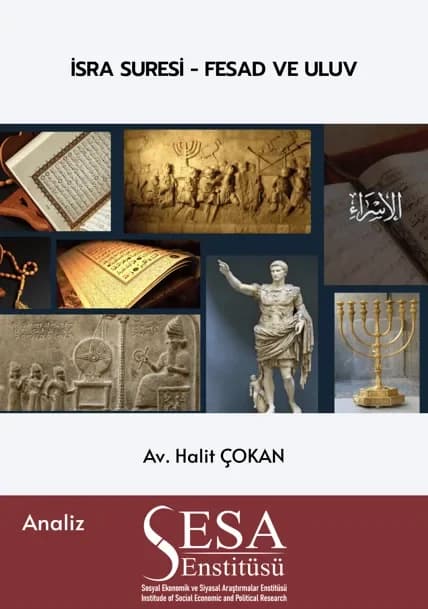
Surat al-Isra – Fasad and Uluw
2 min read
Throughout history, the fall of societies, as much as their rise, has been the result of a socio-political cycle woven from divine laws. The Qur’an expresses this universal principle through the concept of sunnatullah. In the view of the Qur’an, the destiny of societies is shaped not by chance but by the immutable laws of Allah; throughout human history…
INTRODUCTION
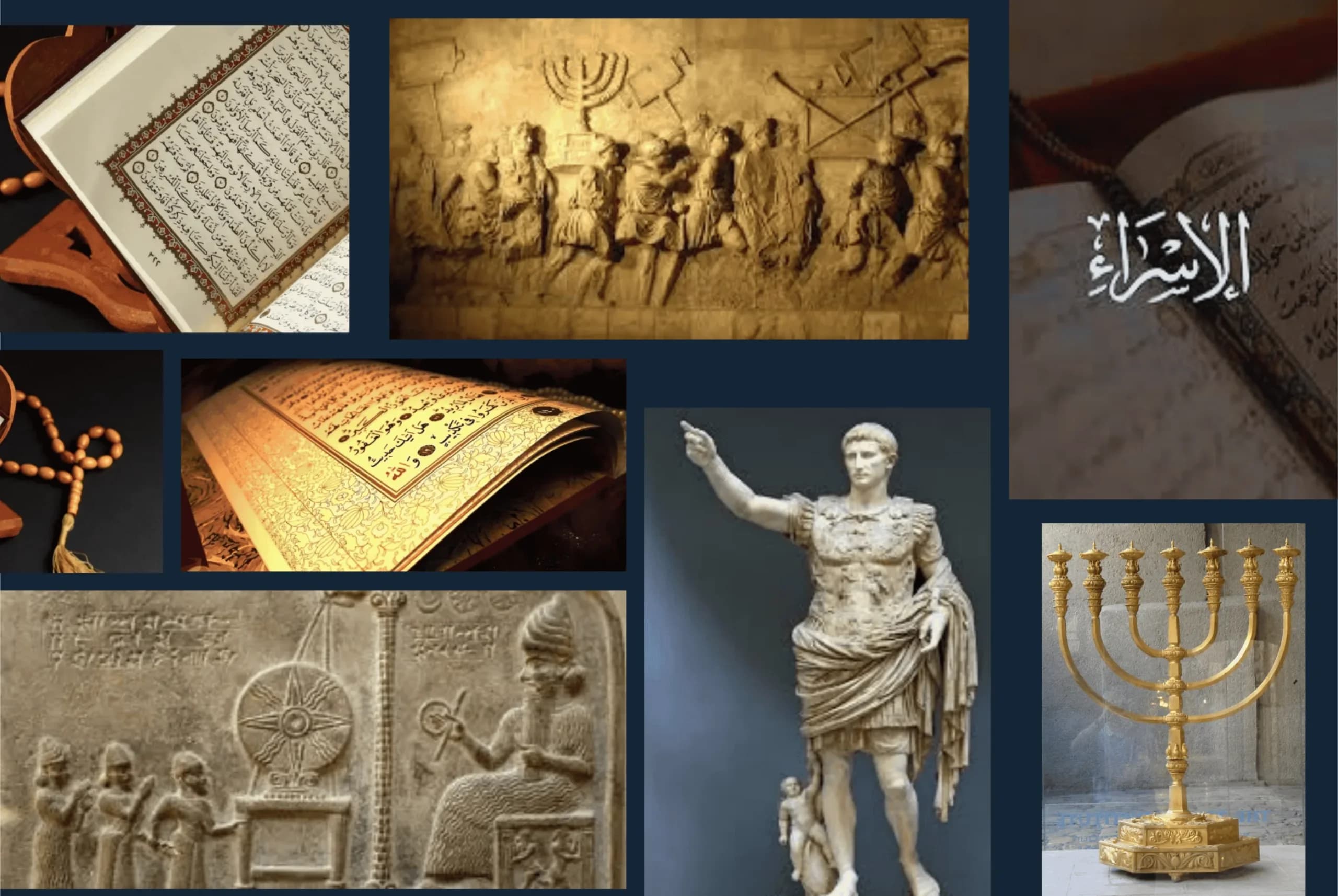
Throughout history, the fall of societies, as much as their rise, has been the result of a socio-political cycle woven from divine laws. The Qur’an expresses this universal principle through the concept of sunnatullah. In the view of the Qur’an, the destiny of societies is shaped not by chance but by the immutable laws of Allah; this divine order, operating throughout human history, is a mechanism that changes the fate of nations and determines the birth and collapse of civilisations. Indeed, the ruling “You will never find any change in the sunnah of Allah” (وَلَنْ تَجِدَ لِسُنَّةِ اللّٰهِ تَبْدٖيلاً) (al-Ahzab 33/62) clearly sets out the continuity of this historical law. In this framework, verses 4–6 of Surat al-Isra offer a historical example of this divine law, which comes into operation in societies where oppression becomes widespread, justice weakens and repression is institutionalised, and present a striking perspective on the fate of societies and states that produce oppression.
The Holy Qur’an treats human history not merely as an account of events that took place in the past, but as a reflection of moral and historical laws valid for all societies. Among the most striking of these laws are the concepts of fasad, meaning social corruption, and uluw, denoting tyranny combined with power. In many places in the Holy Qur’an these two concepts are treated together, and the cycle of rise and fall in human history is explained within this framework.
With regard to fasad, the expression “seeks to destroy crops and progeny” in verse 2/205 of Surat al-Baqarah shows that fasad does not mean only individual sin or moral degeneration; it denotes the systematic destruction of the order of production, the social structure and the human generations. “Crops” (harth) is the symbol of economic life and food security; “progeny” (nasl) is the symbol of humanity’s biological, cultural and moral continuity. By mentioning these two concepts together, the Holy Qur’an emphasises that fasad targets the two fundamental pillars that ensure the continuation of life.
Verse 4 of Surat al-Isra states in particular that fasad, that is, the multidimensional corruption of society and social decay (the collapse of justice, the elimination of fairness, society’s immersion in deep moral degeneration and the dominance of political rot), will reach its peak twice. This account is not merely a chain of events that occurred and ended in past history; it is at the same time a universal warning about the decay of socio-political orders and points to a social reality that also has its counterpart in the literature of international law today. Indeed, at the root of the fasad committed by the Children of Israel lay the abandonment of justice, the usurpation of the rights of the weak and the disregard of divine principles.
Author
Halit Çokan
Director of Islamic Studies
How to cite
Çokan, H. (2026). Surat al-Isra – Fasad and Uluw (Analysis). SESA Institute. https://sesa.org.tr/en/publications/surat-al-isra-fasad-and-uluw
Related publications

Report
2026 Knesset Election: A Victory for the Radical Right Electorate in Israel?
Prof. Veysel Ayhan