Israel’s Cyber Attack and Being a Child in Lebanon
6 min read
Since 7 October, President Erdoğan had repeatedly drawn attention to Israeli expansionism and the threat of a regional war. Israel’s cyber attack on Lebanese Hezbollah on 17-18 September is being read as an open declaration of war. The President’s warning that Israel wanted to spread the war across the region…
Since 7 October, President Erdoğan had repeatedly drawn attention to Israeli expansionism and the threat of a regional war. Israel’s cyber attack on Lebanese Hezbollah on 17-18 September is being read as an open declaration of war. The President’s warning that Israel wanted to spread the war across the region therefore shows a sound analysis of Israeli policy rather than a mere prediction.
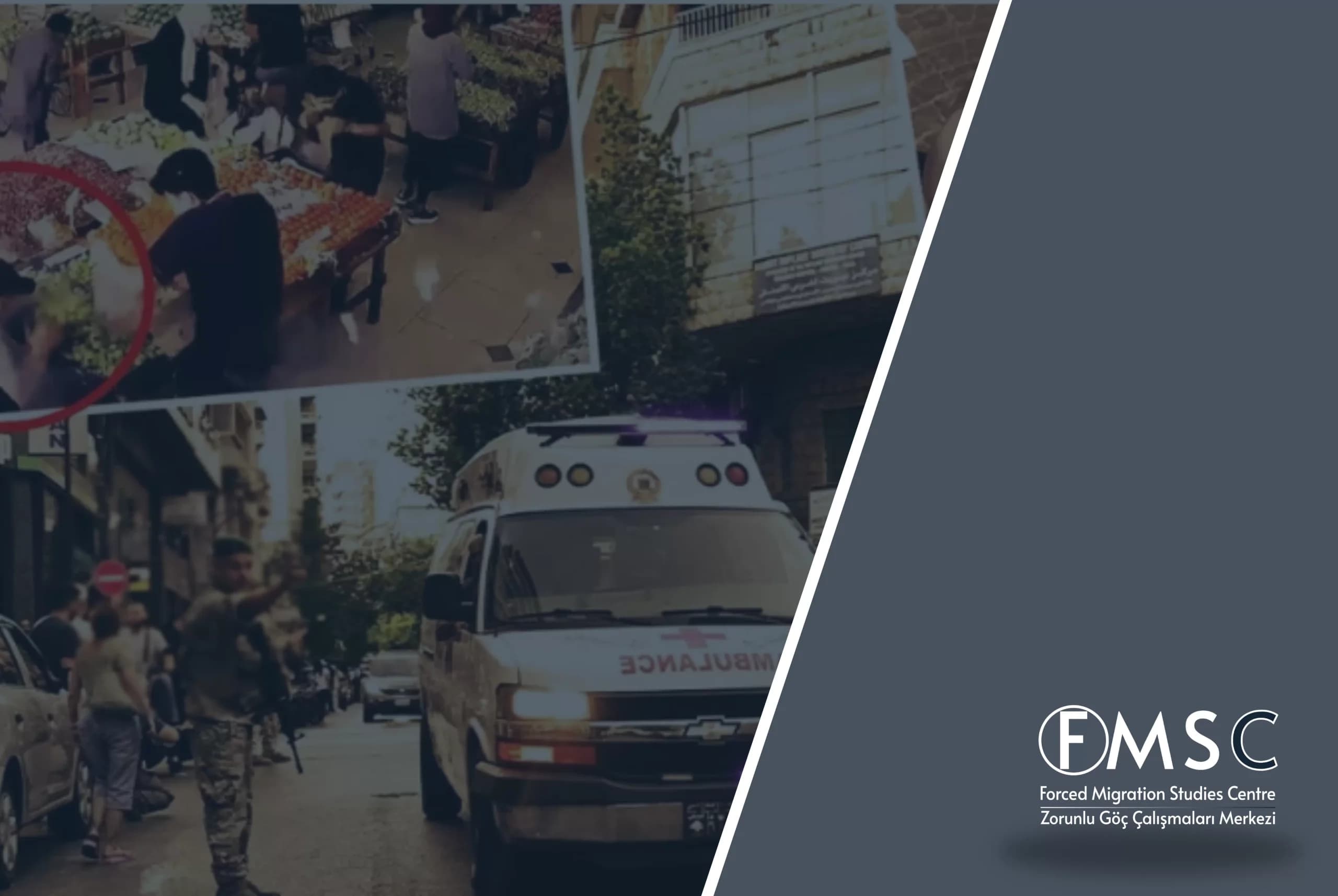
On 17.09.2024 a simultaneous attack was carried out on Hezbollah members and their families using pagers in Beirut, South Lebanon, the Beqaa and Syria. Less than 24 hours after the first attack, a second cyber attack was carried out. The detonation of the pagers, followed by walkie-talkies, killed at least 37 people, including children and women. More than 3000 people were injured in the attacks, 200 of them seriously. Most of the injuries were to the face, hands and abdomen. In a statement on 19 September, Hezbollah leader Hassan Nasrallah announced that Israel would be punished for the attacks. Even as the Hezbollah leader was declaring that Israel had crossed every red line, Israeli warplanes were taking to the skies over Lebanon. As the tension escalating through mutual statements drags Lebanon into a new war, Lebanese children will once again try to cling to life in a whirlpool of life and death in the shadow of weapons.
Being a Child in Lebanon
For children growing up in Lebanon, war seems a natural part of existence and an ordinary event of life. In the 1970s and 1980s, while children played games in the streets to the sound of gunfire, they could at any moment become the target of an air strike or be caught in the middle of fighting. Children played with wooden guns and toy walkie-talkies. At the slightest sound, mothers and older sisters would be at the children’s side in an instant. Every child had a known neighbourhood and street to play in and a known shop to buy from. Whenever a stranger was seen in the street, all eyes would be fixed attentively on the stranger. The elders would not let children leave their own neighbourhood. After the civil war broke out in 1975, Beirut was divided into two separate zones, East and West Beirut. In each zone, every group would set up a barricade at the end of its own street and build a life behind it. Behind the barricades, 15-year-old boys, barely old enough to grow a moustache, would take turns standing guard with weapons in their hands.
With the entry of Syrian troops into Lebanon in 1976, the scale of the fighting increased. Every day children witnessed mourning and funerals. Heroic speeches were made at the funerals, and children too dreamed of becoming heroes when they grew up. In 1978 Israeli forces occupied the area from South Lebanon up to the Litani River. Everyone in the street carried weapons, but no one could fully make sense of who was fighting, and why. In the 1970s and 1980s Lebanese children grew up with names such as the Jumblatt family, the Gemayel family, the Maronites, the Sunnis, the Shiites, the Phalangists, the Palestinians and Amal. There were also Syrian soldiers, Israeli forces, warplanes and tanks in the streets. But in every neighbourhood, Israel was always spoken of as the enemy. When enemy soldiers were mentioned, children understood that these were Israeli soldiers. The others had names: Druze, Phalangists, Sunnis, Shiites and so on. Years have passed, and when we look at Lebanon to see what has changed for the children of that time, the adults of today, Israel is still the enemy and Lebanese children are still growing up in the shadow of war, conflict and weapons. In Israel’s latest attack, children were killed while playing in the street and while with their families. Among those killed in the first day’s attacks were an eight-year-old girl who had gone to fetch her father’s pager and an 11-year-old boy. Dozens of children also lost either their eyes or their hands or fingers. This is how hard and merciless it is to be a child in Lebanon. It means clinging to a thin line between death and life.
The State of War and Israel through a Child’s Eyes
Many claims have been made about Israel’s latest cyber attacks. It is stated that in the latest attacks Israeli intelligence had obtained prior access to the handheld paging systems and carried out the detonations using advanced technology. The pagers used in the attack were manufactured by the Taiwan-based company Gold Apollo. The walkie-talkies were produced by Japanese firms. According to a report in The New York Times, however, Israel had set up shell companies years earlier and infiltrated the production of these communication devices. This shows us that Israel had planned in advance to kill Lebanese people indiscriminately, including women and children. According to assessments by experts on the subject, another possibility is that, after the order for the pagers was received, Israeli secret service placed explosives inside them during the production stage. The batteries were heated by external software and the bomb mechanism was triggered by simultaneously sent messages.
It is clear that the attack plan, which Israel prepared months in advance and put into action two days earlier, was aimed at killing many people indiscriminately, including children and women. The Lebanese Minister of Health said that the explosions had harmed children and the elderly. Israel sees no problem in placing Lebanese children, too, in the category of the enemy. The far-right Rabbi Eliyahu Mali, who teaches at a religious school in Israel, had already declared in a speech to military school students that “today’s babies are tomorrow’s terrorists” and that “everyone must be killed”. In advice to Israeli soldiers and fighting Jews, the Israeli Rabbi Reuven had likewise said: “God commands us to kill children. Our holy book commands us to leave no one alive in time of war. There is no mercy. You cannot show mercy even to a child. If you show mercy, you are being cruel to the victim whom that child will kill when he grows up. For the ideology in which that child will grow up is worse than his father’s ideology. In chapter 25, verse 19 of the Torah, it says that men, women and children have no right to life. God commands that children too be killed.” Consequently, when Lebanese children are regarded as enemies, it is seen as acceptable for children to be killed or to lose limbs in the explosions just like adults.
Innocent Lebanese children, unaware of the plans Israel had ruthlessly prepared, became victims of the communication devices they saw every day and which they may even have used as toys among themselves. After these events, walkie-talkies, pagers, telephones and tablets will remain in the memories and recollections of Lebanese children not as devices for having fun but as weapons trying to kill them. Even though 40 years have passed, in the eyes of Lebanese children Israel is still the enemy trying to kill them, and it will remain the enemy.
Samir Altunkaynak, Lawyer
*This article was first published here.
Author

Samir Altunkaynak
Director of Law and Justice
How to cite
Altunkaynak, S. (2024). Israel’s Cyber Attack and Being a Child in Lebanon (Analysis). SESA Institute. https://sesa.org.tr/en/publications/israels-cyber-attack-and-being-a-child-in-lebanon