Iran’s Attack on Israel: On Its Timing and Strategic Meaning
4 min read
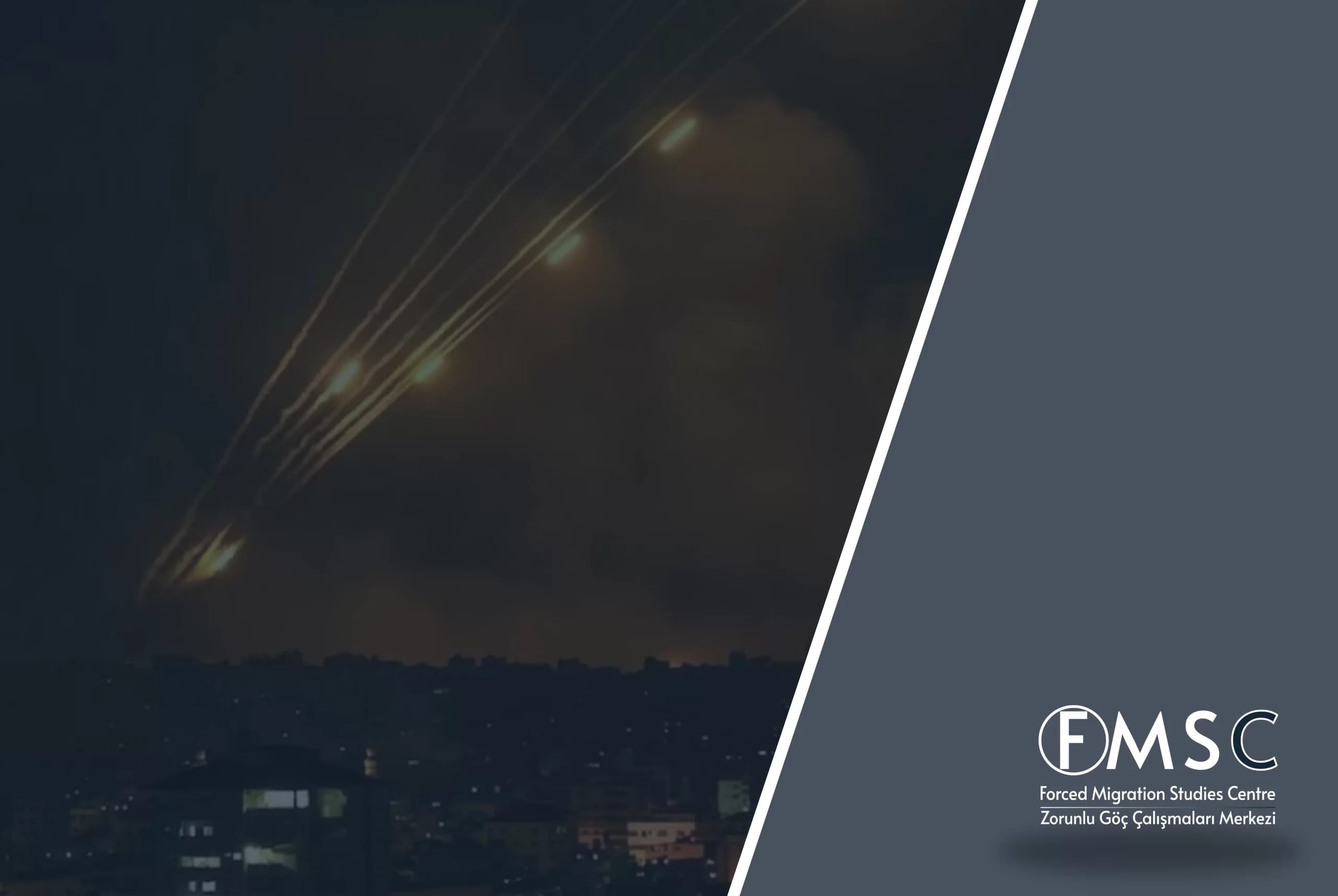
On 1 October 2024 Iran retaliated against Israel for the 2nd time with ballistic and hypersonic missiles. A statement issued by the Islamic Revolutionary Guard Corps said that the attack had been carried out in response to the martyrdom of Ismail Haniyeh, Sayyed Hassan Nasrallah and Revolutionary Guards Major General Abbas Nilforoushan…
On 1 October 2024 Iran retaliated against Israel for the 2nd time with ballistic and hypersonic missiles. A statement issued by the Islamic Revolutionary Guard Corps said that the attack had been carried out in response to the martyrdom of Ismail Haniyeh, Sayyed Hassan Nasrallah and Revolutionary Guards Major General Abbas Nilforoushan. It was stated that the order for the attack had been carried out with the approval of the Supreme National Security Council and on the instruction of the General Staff of the Armed Forces, with the support of the Army of the Islamic Republic of Iran and the Ministry of Defence. The Israeli government, for its part, announced that it would respond with a powerful attack on Iran.
Although the Iranian side announced that it carried out the attack in retaliation for Israel’s assassinations, it is worth analysing the timing and strategic meaning of the attack on a broader scale. In this context:
1- After taking political and military decisions on 30 September to occupy Lebanon, Israel took concrete steps towards its occupation of Lebanon. The Iranian attack will enable Hezbollah, which has lost its leadership cadre and been weakened in morale and motivation, to regroup militarily and respond more forcefully. Otherwise it would be very difficult for Hezbollah to put up resistance similar to that of 2006.
2- In terms of timing, the attack was a response both to Israel and to the US and EU countries, which had misled Iran over a ceasefire, that Iran would not remain silent in the face of an Israeli occupation of Lebanon. In a statement by the Iranian side it had been said that, in return for Iran not retaliating after Haniyeh’s killing, Israel would accept a ceasefire agreement in Gaza. The Iranian side believes that Western countries misled it over the ceasefire and that Israel was given time to attack Hezbollah leaders and then to prepare for the occupation of Lebanon.
3- It can be argued that the Iranian attack will strengthen, in terms of morale, motivation and belief, the involvement of militia forces throughout the Middle East in the war against Israel in the event of a possible occupation of Lebanon.
4- Against the possibility that after 7 October the Gaza War might expand to include Iran, Tehran received strong external support for its military capacity for resistance and defence, above all from Russia. For about 1 year, rather than confronting Israel directly, Iran adopted a crisis management approach that was low-intensity and remained predominantly at the diplomatic level. Following the killing of Nasrallah, the assassinations of Hezbollah’s leadership cadres and the significant deployment of troops to the border for the occupation of Lebanon, Iran too was compelled to counter-attack.
5- Israel, and the Netanyahu government in particular, was given the message that the attacks it had carried out on senior Iranian, Yemeni, Syrian and Lebanese commanders would not go unanswered and would meet with a response.
6- The message was given to all Jews that Netanyahu’s policies have turned Israel into a country exposed to attack. This could trigger Jewish emigration from Israel to the EU and the US.
7- It was shown to both Israeli officials and Western leaders that the West’s strategies for protecting Israel from attack do not reflect reality.
8- It was shown clearly for the first time to Israel, which after Gaza is preparing for a comprehensive attack on Lebanon and Yemen, and to its supporters, that the war will also have costs for Israel.
9- In the face of a possible Israeli occupation, the militia forces were given the message both that we are parts of a common military and ideological paradigm and that we stand together in a possible war. This message will be important for the resistance groups to act with a strong defensive and offensive strategy
10- It can be foreseen that the Netanyahu government’s response to the Iranian attacks will be much harsher than expected. If Netanyahu does not respond harshly to the attacks, he will be forced either to resign or to agree to a ceasefire. If escalation in the clashes cannot be halted, clashes usually turn into a comprehensive war…
Prof. Veysel Ayhan
*This article was first published here.
Author

Prof. Veysel Ayhan
Director of the SESA Institute
How to cite
Ayhan, V. (2024). Iran’s Attack on Israel: On Its Timing and Strategic Meaning (Analysis). SESA Institute. https://sesa.org.tr/en/publications/irans-attack-on-israel-on-its-timing-and-strategic-meaning
Related publications

Report
2026 Knesset Election: A Victory for the Radical Right Electorate in Israel?
Prof. Veysel Ayhan