The Pakistan–Taliban Conflict: The Security Dilemma and Its Regional Geopolitical Significance
2 min read
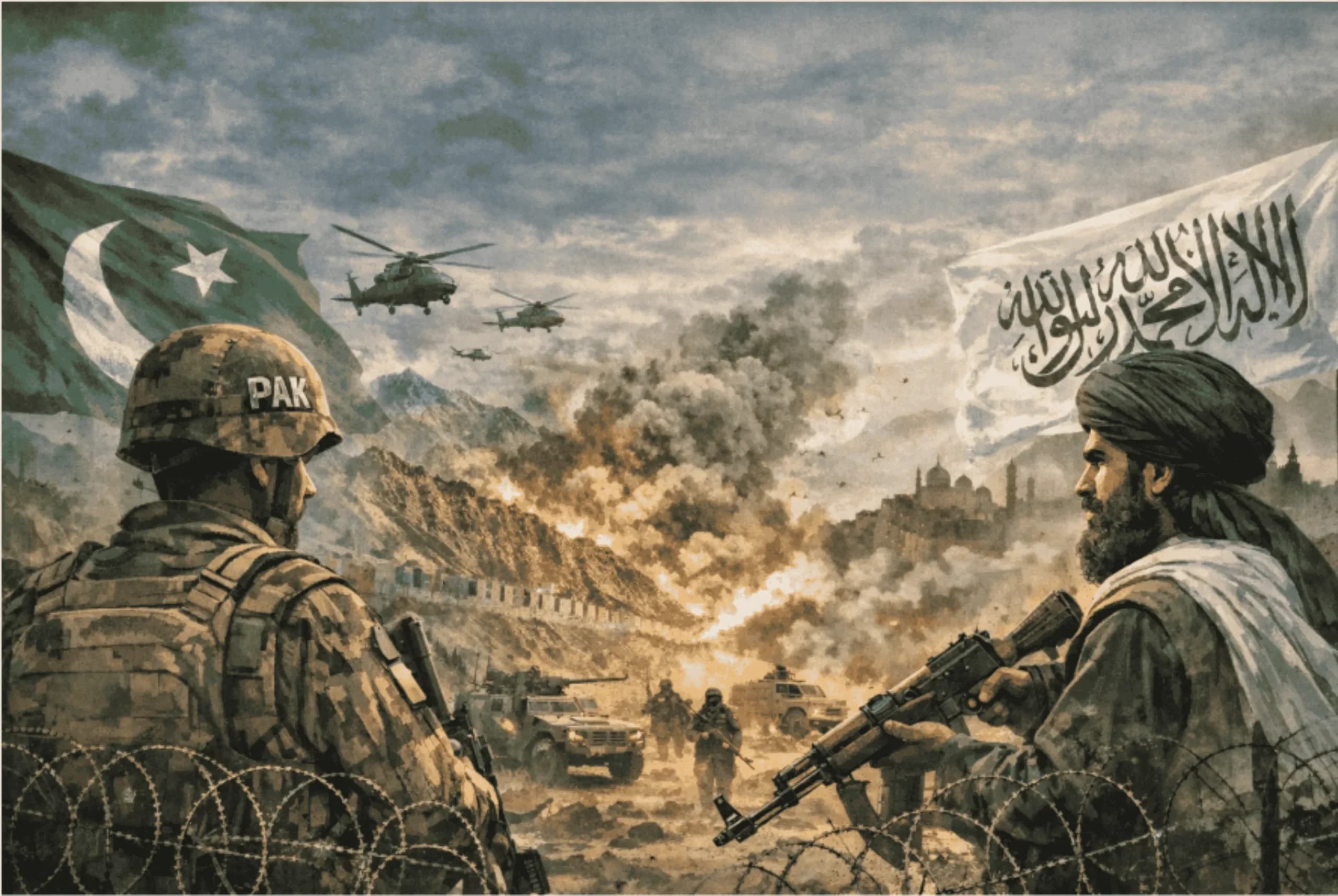
Relations between Pakistan and the Taliban have historically continued up to the present day as a complex security problem oscillating between cooperation and tension. Having emerged with Pakistan’s indirect support for the Taliban in the 1990s, this support was explained by the search for strategic depth and the aim of limiting Indian influence in Afghanistan…
INTRODUCTION
Relations between Pakistan and the Taliban have historically continued up to the present day as a complex security problem oscillating between cooperation and tension. Having emerged with Pakistan’s indirect support for the Taliban in the 1990s, this support was explained by the search for strategic depth and the aim of limiting Indian influence in Afghanistan; the Taliban’s return to power in Afghanistan in 2021, however, has brought new and hard-to-predict security risks for Pakistan. In particular, Tehrik-i-Taliban Pakistan (TTP) emerged in 2007 from the merger of various armed groups in Pakistan’s Federally Administered Tribal Areas; their ideological embrace of the Afghan Taliban, their subsequent establishment in many provinces in the south-east of Afghanistan such as Helmand, Paktia and Nangarhar, and their armed attacks against Pakistan from inside Afghanistan have been a matter of serious concern for Pakistan and of significance for its border security.
The relationship between the Afghan Taliban and the TTP has undoubtedly been shaped by ideological affinity, historical solidarity and cross-border tribal ties. There are, however, differences between the two structures in terms of strategic priorities. While the Afghan Taliban focuses on consolidating power at the national level, the TTP is waging an armed struggle targeting the Pakistani state. This produces a chronic security tension between the two countries.
In the period after 2014, the widening security vacuums in Afghanistan created fertile ground for various jihadist and radical structures. In this context, ISIS-Khorasan (ISIS-K), founded in 2015 as the Afghan branch of the Islamic State of Iraq and the Levant, emerged as an extremist alternative to the Taliban. Within a short time it became a threat both to the Taliban and to regional actors. Although the Taliban has conducted operations against ISIS-K in order to gain international legitimacy, the organisation has maintained its presence, particularly in eastern Afghanistan. Claims that certain elements of the TTP have at times established tactical contact with ISIS-K have further complicated the security architecture in the region.
Author
How to cite
Rizazade, H. (2026). The Pakistan–Taliban Conflict: The Security Dilemma and Its Regional Geopolitical Significance (Article). SESA Institute. https://sesa.org.tr/en/publications/the-pakistan-taliban-conflict-the-security-dilemma-and-its-regional-geopolitical-significance
Related publications
Analysis
China’s Approach to the Middle East Crisis in the Context of the Iran War, and Relations with Türkiye
Yener Yılmaz and Sinem Topçu