
From Conflict to Institutional Peace in the Caucasus: The Resolution of the Karabakh Question and Zangezur Corridor Diplomacy
1 min read
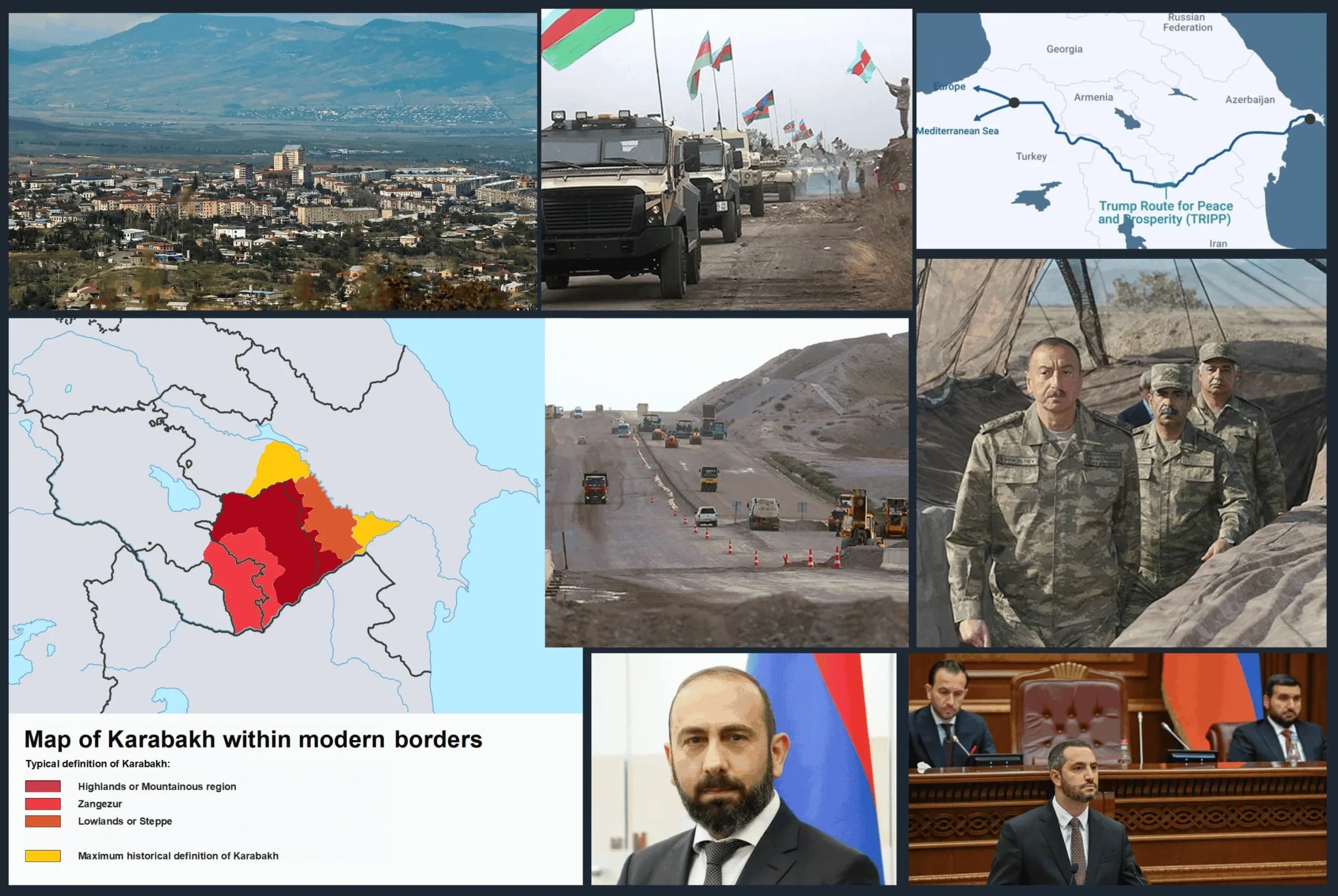
This study offers a holistic analysis of the new regional peace architecture that has taken shape in the South Caucasus after the military phase of the thirty-five-year Karabakh conflict, within the framework of John Paul Lederach’s theoretical model of “conflict transformation” and Barbara F. Walter’s models of the “commitment problem” and “third-party institutional…
SUMMARY
This study offers a holistic analysis of the new regional peace architecture that has taken shape in the South Caucasus after the military phase of the thirty-five-year Karabakh conflict, within the framework of John Paul Lederach’s theoretical model of “conflict transformation” and Barbara F. Walter’s models of the “commitment problem” and “third-party institutional guarantees”. The joint declaration, whose draft text was completed through bilateral negotiations in March 2025 and which was signed at the Washington Summit on 8 August 2025 by US President Donald Trump, Azerbaijani President Ilham Aliyev and Armenian Prime Minister Nikol Pashinyan, goes beyond a superficial ceasefire and represents a legal and institutional compact in which the parties recognise each other’s sovereignty and territorial integrity. Nevertheless, the historical enmity between the parties and the fear of future shifts in the relative balance of power keep alive the “geometric power shift” emphasised by Walter and the existential security dilemma. In this context, the transformation of the Zangezur Corridor, under the name “TRIPP” (Trump Route for International Peace and Prosperity), into a multinational consortium with US shareholding, financing and physical oversight functions as a binding external institutional guarantee mechanism that mitigates the commitment problem. At the same time, Armenia’s “Crossroads of Peace” vision and multimodal infrastructure network, by creating structural and economic interdependence in the Lederachian sense, make it necessary to transform collective memory, national identity and revanchist narratives. The article examines the steps towards border delimitation, the debates on constitutional amendment, the reactions of regional actors and the shifts in the regional and global balance of power.
Author

How to cite
Tecer, Ö. Ç. (2026). From Conflict to Institutional Peace in the Caucasus: The Resolution of the Karabakh Question and Zangezur Corridor Diplomacy (Analysis). SESA Institute. https://sesa.org.tr/en/publications/from-conflict-to-institutional-peace-in-the-caucasus-the-resolution-of-the-karabakh-question-and-zangezur-corridor-diplomacy