
Dr Djelloul Seddiki, Director of the Al-Ghazali Institute of the Grand Mosque of Paris: Muslims need to unite, because the process we are going through is highly problematic and difficult
12 min read
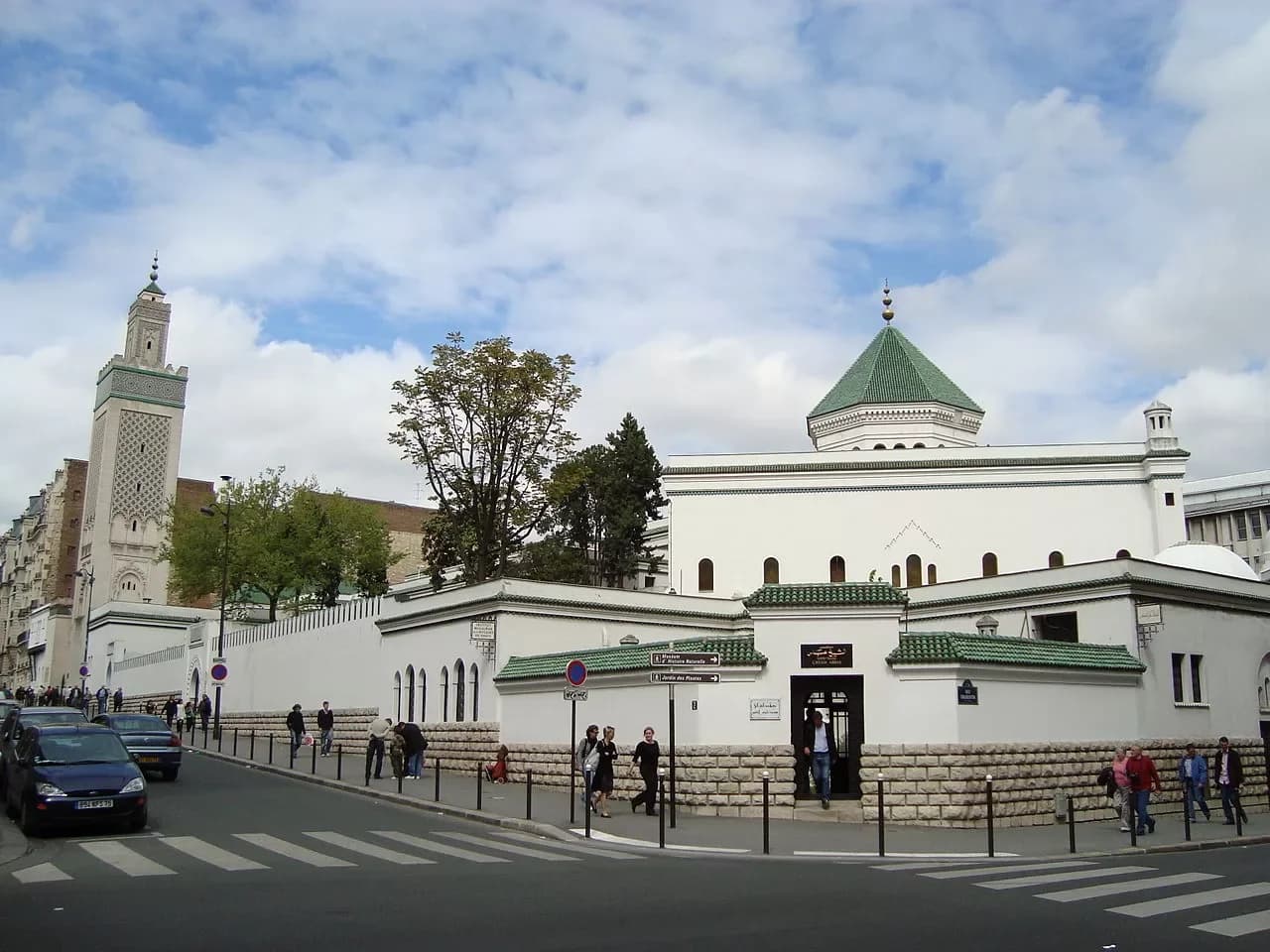
An interview with Dr Djelloul Seddiki conducted by Prof. Veysel Ayhan. Dr Djelloul Seddiki is the Director of the Al-Ghazali Institute, which is attached to the Grand Mosque of Paris. Having completed a doctorate at Paris Nanterre-La Défense University, Dr Seddiki worked as an academic at Sabha University between 1983 and 1986…
An interview with Dr Djelloul Seddiki conducted by Prof. Veysel Ayhan.
Dr Djelloul Seddiki is the Director of the Al-Ghazali Institute, which is attached to the Grand Mosque of Paris. Having completed a doctorate at Paris Nanterre-La Défense University, Dr Seddiki worked as an academic at Sabha University between 1983 and 1986 as an Assistant Professor. Between 1986 and 1996 Dr Seddiki pursued various writing and journalism activities in France, and in 1996 took up a post as a religious instructor at the Grand Mosque of Paris. Directing the programme for the training of imams and clergy at the Grand Mosque of Paris, Dr Seddiki is also the Director of the Al-Ghazali Institute attached to the mosque.
Dr Veysel Ayhan: Thank you very much for making time for us in your busy schedule. First of all, I would like to ask you to tell us about the structure of the Muslim community in France. To be frank, we would like to learn, from your perspective, about the origins of the Muslim communities living in France, their relations with the French government and the French government’s view of the Muslim community. It is quite striking that a Muslim community of around 6-7 million people lives in this country, even though the French foreground Christianity in their definitions of identity. To begin with a question: how, in your view, can the situation of the Muslim communities in France be described?
Dr Djelloul Seddiki: In the name of Allah, the Most Gracious, the Most Merciful; may the blessings and peace of Allah be upon Muhammad (peace be upon him), upon his companions and upon all the world of faith. Our friend who has come to visit us has asked us to speak about the Muslims living in France, and we shall of course help in this regard. If we were to summarise briefly the relations between the Muslims in France and the French, it would be possible to divide them into four parts. The first is when, historically, Muslim migration to France began; the second is the identity problem experienced by Muslims in France, as in Germany; the third concerns certain issues such as the question of the veil; and the fourth comprises general problems. Large-scale Muslim migration to France can be dated to the beginning of French interest in North Africa. Of course, as historians have also noted, the arrival of Arabs on French soil goes back much further. Nevertheless, in order to understand the structure of today’s Muslim community, attention must be drawn to the migration that took place after the 1850s. As is well known, during that period North African countries such as Tunisia and Morocco came under French protection and became part of France. This region, which came under French hegemony before the First World War, had very considerable religious and cultural needs. The Grand Mosque of Paris, where we are now, was also built during that period. We can therefore say that large-scale Muslim migration began after the 1850s.
Although the relationship between the French and the Muslims, and thus with Islam as a religion, goes back a very long way, it is worth going back in particular to the Ottoman state, and especially to the time of Suleiman the Magnificent in the 1540s. It is known that there were certain talks between the Ottoman state and the King of France during this period. Indeed, the Ottoman state was at that time seeking to establish the caliphate fully. The King of France, for his part, was arbitrating in a division that had arisen between Spain and Germany. There is therefore a highly complex relationship between France and the Muslims. If we were to speak of Ottoman–French relations at that time, it must be said that these lands were lands of peace, not of war. Looking at this complex and combined structure, we can draw this interpretation from the relationship between the Islamic world and France. In this context, the relations established with the Ottoman state in the early period can be seen to have rested on a solid foundation. Later, however, France’s growing strength and its establishment of power over certain Arab lands had a negative effect on its relations with Muslims.
In this context, we see that in the 1860s Muslims faced the problem of representation in the French Parliament. Later, however, through the privileges arising from constitutional rights, Muslims began to make their presence felt in the Assembly as well, being represented in educational institutions in addition to enjoying the rights to vote, to stand for election and to demonstrate. Without dwelling too long on history, we can say in short that the arrival of Muslims in France dates from the beginning of the century. Another important point is that, during the periods when France was under occupation, Muslims fought for the freedom of France and took an active part in the process of rebuilding France after the war. In the period after the Second World War, when Europe as a whole had stagnated and France was receiving economic support under the Marshall Plan for its reconstruction, the French opened their doors to their former colonies in order to meet the need for foreign labour migration that had arisen. Under this foreign labour migration, workers came to France from Morocco and Algeria as well as from countries such as Gabon, Cameroon, Mali, Niger, Chad and Jordan. French territory thus became the scene of large-scale Muslim migration for a second time.
In this context, it should be underlined that the second wave of Muslim migration differed from the others. The immigration law enacted in 1967 by Jacques Chirac, the then President, enabled many families to migrate to France. Following the law, we see immigrant families emerging in France. On the other hand, serious problems arose regarding the integration into society of the foreigners who had worked hard to rebuild France, and the French constantly regarded the newcomers as immigrant families. This inevitably led to certain tensions in education and pre-school institutions. During this process, Islamic communities emerged in France in organised form and religion began to be defined as an identity. In other words, religion emerged as an identity through which families and immigrants defined themselves. As religion strengthened the bond among immigrants at institutional and social level, the people who had come from abroad began to live in greater peace.
At that time, the considerable prosperity that the country’s economy achieved after the arrival of immigrants in France led the French people to take a positive view of Muslims. The changing national economy had a positive effect on attitudes towards the Muslims living here. It came to be accepted that Muslims had played a very important role in achieving economic stability.
Dr Veysel Ayhan: Very different figures are cited for the number of Muslims living in France. What are your estimates on this?
Dr Djelloul Seddiki: In numerical terms, the Muslim population may well exceed 6,500,000 (six and a half million). Some argue that the figure is 7,000,000 (seven million). A significant part of the Muslim population consists of Muslims of North African origin. In this context, it should be noted that the first immigrants in France were Algerians. The Algerian population in France has reached around 3,500,000 (three and a half million). Some of them have acquired French citizenship, while others retain their Algerian citizenship. Some enjoy dual citizenship. It is stated that marriages play an important role at this stage, and that around 1 million Algerians have acquired citizenship. It should be noted that those who have acquired citizenship define themselves as French. Besides Algerians, there are also Moroccans, Tunisians, Lebanese and people from other countries in France. It should be noted that among them, too, there is a significant population that has acquired citizenship or retained its former citizenship.
Looking at the figures, we see that, in addition to Muslims, a large number of Jews also live in France. It should also be noted that there is a significant non-French Christian population that came to France later.
Likewise, it should be stated that there is a significant Turkish population in France. The Turks here, however, fall into two groups: the first comprises the earlier arrivals, and the second those who migrated to Germany and came here from there. Unlike the Arabs, however, the Turks have had different relations both with the Arabs in France and with the French. We cannot forget the time when the Ottoman state was in Algeria in the 1590s. Relations between the Ottomans, who eventually reached the Moroccan border, and Morocco were also different. Today, therefore, relations between Algeria, Türkiye and France also affect Tunisia–Türkiye and Morocco relations. This situation continues to affect relations between the Turks and Arabs living in France.
Dr Veysel Ayhan: What do you think about the organisation of Muslims in France? In your view, have the Muslim communities succeeded in establishing structures through which to express themselves at institutional level?
Dr Djelloul Seddiki: Although a Muslim population of 7 million is certainly a large figure, it is evident that certain legal organisations are clearly needed as well. In this context, taking into account the general situation of Muslims, we supported the establishment of councils in France in the nature of umbrella associations. We adopted a federative structure in establishing this council. The first of these is the Conseil Français du Culte Musulman – CFCM, which is a legal institution also recognised in law by the French state. The other is the confederative association called the Union of Islamic Organisations of France (UOIF), which also includes Turkish associations. Apart from these two, there are also associations that bring together African communities. The process of establishing associations operating legally was of course not easy. We have always pointed out that it is difficult to obtain legal rights in countries such as France and Germany that intervene in religious affairs. Since the time of Napoleon, France has been very sensitive on these matters. States are of course eager to intervene in such associations for reasons of national security. We see, however, that the Muslim communities act together in protecting the legal rights of all Islamic associations in France. Nevertheless, it should also be said that we have problems that remain unresolved.
On the other hand, there are also certain problems among us Muslims. The lack of a common communication centre is a very significant problem. All Muslim communities – Turks, Arabs, Persians, Sunnis, Hanafis, Shafiʿis, Shiites – all of us should come together and develop dialogue among ourselves. We should discuss our views on matters such as zakat, fasting and the beginning and end of the month of Ramadan, and demonstrate the need for unity on these matters. Such communication and sharing of information will also help to build an environment of learning and a fine and strong unity. In essence, there is no difference between a Turkish, an Arab or an Egyptian imam, and we all bring common matters to the fore. I have also been to Kosovo, Bosnia and Herzegovina and Azerbaijan, and I have seen that there is no difference between us and many of our brothers and sisters. We all say, “There is no god but Allah, and Muhammad is indeed His Messenger.” We all agree on the Book of Allah, on prayer and supplication, and the same suras are found in all our Qur’ans. I have also been to İzmir and Istanbul and exchanged views with our friends there. We saw that there is no religious difference between us that would lead to division. If I were an imam and recited the Qur’an in Istanbul, everyone would understand me, so there would be no problem; a common programme should therefore be drawn up, that is, a plan to teach Islamic civilisation, culture and the Qur’an. That is why we say Islam, not Arab Islam; we do not say Arab civilisation, we say Islamic civilisation.
Dr Veysel Ayhan: Türkiye has long sought full membership of the European Union. What do the Muslim communities in France think about Türkiye’s EU membership? Do they support Türkiye’s full membership of the EU? Or do they not want a Türkiye that has become a full member of the European Union?
Seen from France, Türkiye is clearly a major state. It is a country with a population of 75 million and a strong economy. Personally, I support Türkiye once again having good relations with the Middle East and Muslim countries, as in the Ottoman era. I want and hope that Türkiye will form a strong union together with the Muslim countries of the region. Türkiye is a strong state, and Erdoğan’s speech about Israel left a very great impression on Arabs. His outburst at Davos in particular was very effective and powerful: we all said alhamdulillah, and the entire Arab community supports Türkiye.
On the other hand, the only country that would fear and be wary of Türkiye joining the European Union is France. In general, the right wing in France does not want Türkiye to join the European Union. Türkiye’s inclusion in this Union would of course be excellent for all the Muslim communities living within Europe’s borders. We believe that a Türkiye that had become a full member would defend the rights of Muslims within the EU. But I would sincerely like to say that I am in favour of Türkiye developing its relations with the Muslim countries of the region; Türkiye, Syria, Jordan, Eurasia… a very powerful structure would emerge. Personally, I believe that the strongest country in such a union would be Türkiye. The Ottoman state is a state founded in the 1200s that lasted 850 years and, from the 1500s until the time of Mustafa Kemal Atatürk, held the office of the caliphate. Türkiye must be assessed as a state with a historical background.
Dr Veysel Ayhan: If Türkiye becomes a member of the European Union, how do you think the Muslim community in France will be affected?
Dr Djelloul Seddiki: Türkiye’s membership will undoubtedly affect us as well. We want this with all our hearts. At present the Arab states are weak – Iraq, Lebanon, Syria; we could give many examples – but Türkiye is a strong country. We can see Türkiye’s influence in the Caucasus, and even in Azerbaijan and Tajikistan. On the other hand, Türkiye’s presence in the Middle East has become a necessity, because we see that American influence in the region is about to come to an end. We also believe that a Türkiye that is a member of the EU will be a supporter of all Muslims, including us Arabs.
Dr Veysel Ayhan: Thank you very much for your time.
Dr Djelloul Seddiki: Thank you. Take care.
Author
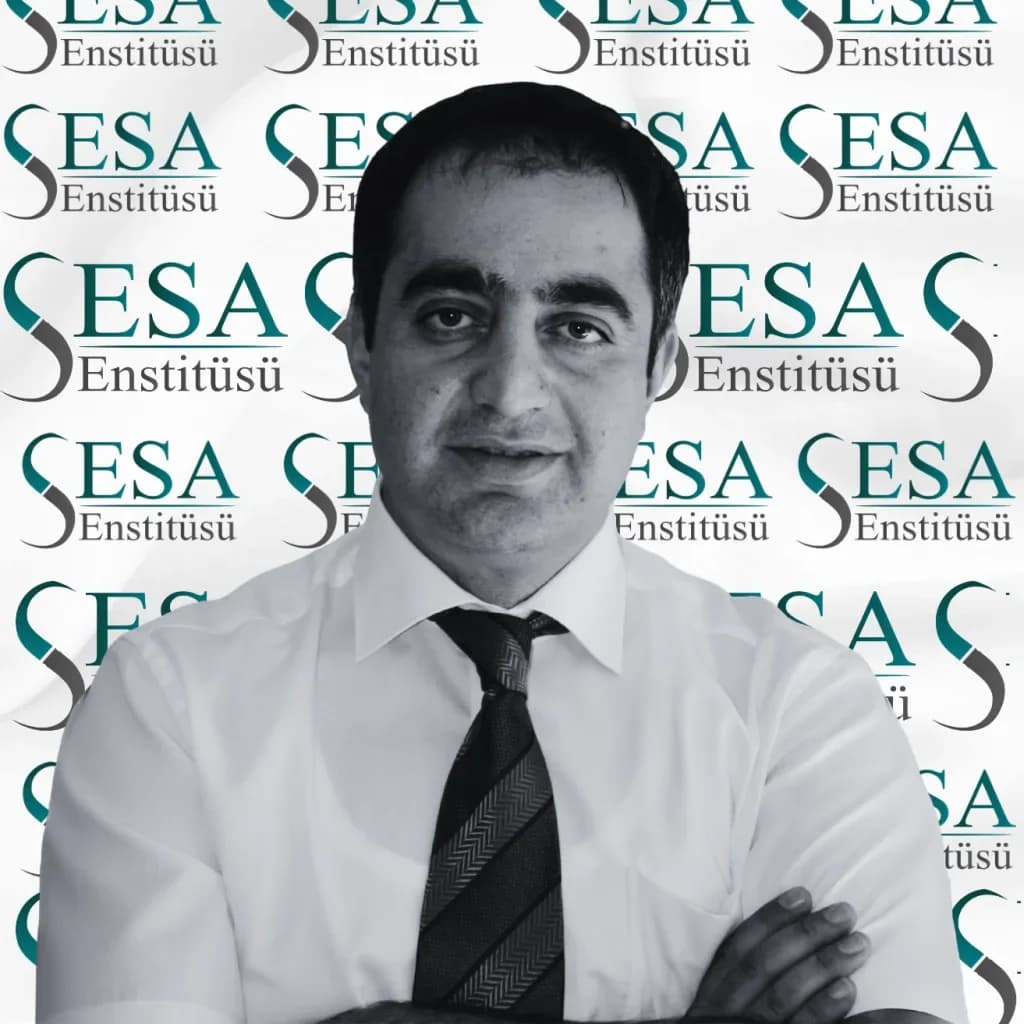
Prof. Veysel Ayhan
Director of the SESA Institute
How to cite
Ayhan, V. (2020). Dr Djelloul Seddiki, Director of the Al-Ghazali Institute of the Grand Mosque of Paris: Muslims need to unite, because the process we are going through is highly problematic and difficult (Interview). SESA Institute. https://sesa.org.tr/en/publications/dr-djelloul-seddiki-director-of-the-al-ghazali-institute-of-the-grand-mosque-of-paris-muslims-need-to-unite-because-the-process-we-are-going-through-is-highly-problematic-and-difficult