
Humanitarian Global President Ayhan: “One million people are inclined to migrate rapidly”
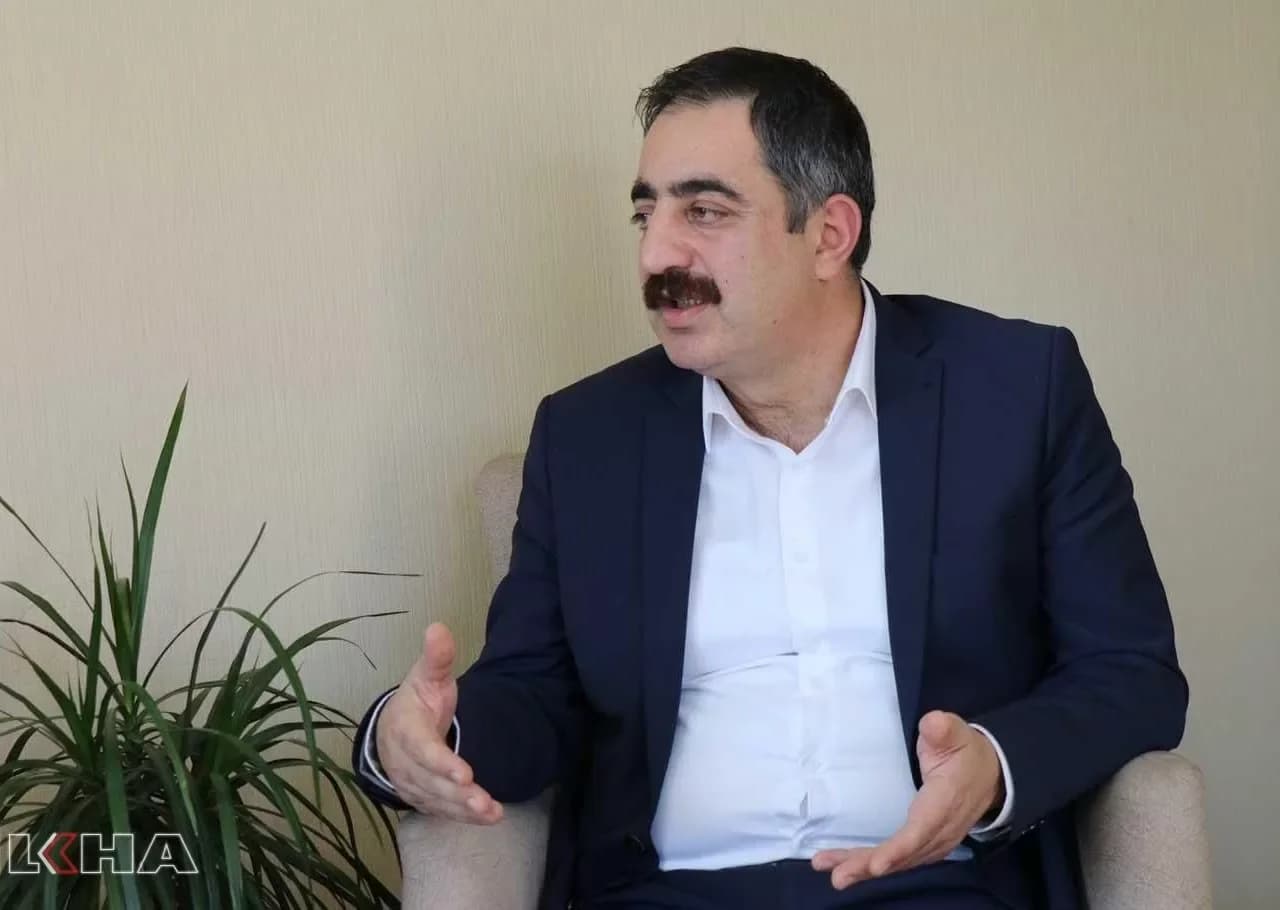
“We see that 6 million Syrians have left the country as a result of forced migration” Emphasising that Syria’s population was 23 million in 2011, Ayhan said: “As of today, we see that 6 million Syrians have left the country as a result of forced migration. Of these, 3 million 600 thousand have come to Türkiye…
“We see that 6 million Syrians have left the country as a result of forced migration”
Emphasising that Syria’s population was 23 million in 2011, Ayhan said: “As of today, we see that 6 million Syrians have left the country as a result of forced migration. Of these, 3 million 600 thousand have come to Türkiye. Others have gone to Lebanon, Jordan and Europe. Approximately 40% of the population has therefore left the country. Türkiye provides services to migrants under a regulation it issued in 2013. Of course, Türkiye’s migration policy has undergone change. The mass migration movements that emerged as a result of the war that broke out in Syria in 2011 also brought with them debates on what strategy Türkiye would pursue. Türkiye’s previously existing migration policy did not correspond to a legal framework for mass migration. We can say that, with the arrival of mass migration, practices were put into effect under legal regulations concerning Syrians. The Syrians currently living in Türkiye therefore reside in Türkiye with residence permits. They themselves fulfil in Türkiye the rights and responsibilities that their residence entails.”
“It is stated that a mass migration of nearly 700 thousand people has now arrived along the border”
Stating that Türkiye cannot cope with a mass migration, Ayhan said: “When we take the official statements into account, Türkiye is stating at the highest level that it cannot cope with a mass migration from Idlib. When we consider the statements made at the level of the Presidency, the Ministry of Foreign Affairs and the relevant ministries, it is clear that Türkiye’s economic capacity does not allow it to absorb this mass of people. It is stated that a mass migration of nearly 700 thousand people has now arrived along the border and that they are being held in an area close to the border. Türkiye will therefore not be able to apply in the Idlib crisis the open-door policy it applied after 2011. It must be underlined that Türkiye has no strategy or policy to cope with a mass migration from Idlib. But it should be said that if the nature of the clashes changes and the fighting reaches the border areas, Türkiye may take in these migrants in order to prevent a massacre of civilians.”
“Looking at the Syrian context too, the country where the largest number of migrants live is Türkiye”
Stating that Türkiye hosts the largest number of people subjected to forced migration in the world, Ayhan noted the following:
Looking at forced migration in the world today, we must say that Türkiye hosts the largest number of people subjected to forced migration. Looking at the Syrian context too, the country where the largest number of migrants live is Türkiye. Compared with other countries, we can say that Türkiye is the country with the best living conditions. In Türkiye, for example, access to the rights to health and education has been secured. When we look at Jordan and Lebanon, however, we see that people are still living in camps. We see that they face problems of access to basic foodstuffs and problems of shelter.
“They saw Türkiye as a way out for migrants”
Drawing attention to the many reasons why Türkiye took in migrants subjected to forced migration, Ayhan said: “First of all, because the fighting was heavily concentrated in the north of Syria and there was a dense population in this region, people flocked to the other side of the border, that is, to Türkiye. A significant proportion of this mass migration came to Türkiye. In terms of both its economic and its physical capacity, Türkiye was in very good condition to provide services to the people who arrived. It is also very important that the political will adopted a humanitarian approach and put it into practice. In Lebanon there was a fragmented political structure. This fragmented political structure was also affected by the Syrian war. While part of society supports the opposition in Syria, another part supports the regime. This, in turn, creates an insecure environment. In addition, the state’s resources and living conditions were limited. When we look at Jordan, we see that there are already very serious economic difficulties there. Iraq, for its part, is itself going through a civil war. They therefore saw Türkiye as a way out for migrants. A few things need to be listed here. First, the political will’s view of this was very important. The political will displayed a humanitarian approach. Second, capacity was very important. Türkiye’s economic capacity and its infrastructure capacity in many areas, from education to health, were at a level that could provide migrants with certain opportunities. Indeed, camps were set up. In these camps people’s needs for shelter, security and other necessities were largely met. We see that other countries did not have these means.”
“Türkiye hosts far more migrants than all these countries of the region”
Referring to the statistics on migration from Syria, Ayhan said: “The number of Syrians who have migrated to Europe is assumed to be around one million. It is stated that a significant proportion of them migrated between 2015 and 2016. In Iraq, the figure is stated to be around 200 thousand. Many of them live in the Kurdish region. In Lebanon, there are assumed to be around 750 thousand migrants. As many again are assumed to be in Jordan. Looking at it, therefore, Türkiye hosts far more migrants than all these countries of the region. As the fighting intensified, civilians moved to areas within the country that they regarded as safer. Very large figures are being cited. For example, the population of the centre of Idlib, put at 120 thousand before the war, is today put at one million 400 thousand in the centre and surrounding settlements. There is an enormous concentration of population in this region. Because of the fighting, there was considerable population movement within the country. For there were those who did not want to leave the country or did not have the means to leave it. In this way, a very large population was displaced within the country.”
“In the 2015-2016 crisis nearly one million people migrated directly to Europe”
Saying that Europe should be assessed separately in the Syrian crisis, Ayhan said: “Because in the 2015-2016 crisis nearly one million people migrated directly to Europe. In the context of these mass migrations, Europe did not even have the chance to apply its own legislation. In this process we all saw the drama experienced by the people who migrated to European countries. In the period that followed, there is an understanding reached between Türkiye and the EU. Under this agreement, a readmission agreement was concluded between Türkiye and the EU. In this process, the resettlement of migrants in the US and especially Canada came onto the agenda. We can say that the migration administration has pursued an effective policy here. In fact, it plays an effective role in the resettlement in Europe and America of groups that can be described as disadvantaged in terms of their circumstances. It must also be seen, of course, that Europe wants to take in the qualified part of the population.”
“We can say that Europe has failed the test of acting in coordination with Türkiye”
Continuing, Ayhan noted the following:
Looking at Europe, we see that it does not accept a mass migration. We could have the following debate: let us resettle at least 2 million of the 3 million 600 thousand Syrians in Türkiye in Europe. That is, let Europe host these people. Europe does not entertain this. This is the point we need to discuss: on the one hand, Europe is not fulfilling its obligations with regard to burden-sharing, nor is it providing the economic aid it promised for improving the conditions of migrants in Türkiye. It has still not delivered the promised aid of 3+3 billion euros. Another issue is that it shows no will to take a larger number of people into its own countries. This is also a matter of serious debate. On another matter, we can say that Europe has failed the test of acting in coordination with Türkiye. Looking at all this, we can say that Europe has failed the test of human rights.
“Türkiye does not have the capacity to take in this entire population in a short time”
Ayhan said: “There is talk of three and a half million people living in this region. Türkiye does not have the capacity to cope with the entry of this entire population into the country in a short time. It is not impossible, but it is a very difficult situation, and moreover a very difficult situation for many countries. For example, between 2015 and 2016 one million people went to Europe, and the European system experienced very serious difficulties. Considering Türkiye’s total capacity, therefore, it seems very difficult for it to cope with this mass of people. The fighting in this region is currently 8 kilometres from the city centre of Idlib, but if the fighting reaches the city centre we see that one million people are inclined to migrate rapidly. The spread of the fighting to the city centre will therefore cause this mass of people to migrate towards Türkiye. Because Türkiye will not be able to take this mass of people into the country, a human tragedy could unfold. We see that the international institutions have also made no preparations for this situation.”
“Around 670 thousand Syrian children have been enrolled in school under compulsory education”
Drawing attention to the social integration problems experienced when migration to Türkiye first began, Ayhan said: “First of all, social integration programmes were launched in Türkiye. Under these programmes, work was done to ensure migrants’ adaptation to Türkiye. We can say that around 670 thousand Syrian children have now been enrolled in school under compulsory education. Nevertheless, we see that 500 thousand children have still not been enrolled. We see that there are serious difficulties in language learning. They have serious difficulties in learning the language of the society in which they live. There is no legal obstacle to their making use of health services or working. In practice, however, certain difficulties are experienced. These people receive considerable support for becoming employers and setting up businesses. Looking at the number of businesses opened by these people, it can be seen that a significant contribution has been made. As for social integration and socialisation, we can say that this may come about over time. For, for many reasons such as job opportunities and family ties, these people live together in particular areas in many cities, and this makes social integration more difficult.”
“110 thousand Syrians have become citizens of Türkiye”
Stating that 110 thousand Syrians in Türkiye have acquired citizenship, Ayhan said: “Looking at the latest figures announced, we see that approximately 110 thousand Syrians have acquired citizenship. When we say 110 thousand citizenships: when the mother or father in a family acquires citizenship, the other members of the family also acquire citizenship. That is how this number arises. We can say that the citizenship process is also continuing. Certain criteria apply in this process. Although these criteria have not been announced in writing, the following is stated in the meetings we have held: their level of education, their economic situation in Türkiye and a security perspective are considered. We can say that the number of citizenships may increase in the coming period.”
“There are millions of migrants in Türkiye”
Pointing out that perceptions sometimes take precedence over reality, Ayhan said: “This can lead to social and societal conflict. It must be said that we now see anti-migrant sentiment being seriously promoted in the media and on social media in Türkiye, and that a certain group is doing this deliberately. Some attribute unemployment and certain other problems in Türkiye to the presence of migrants. We saw similar things in Europe. Anti-migrant political movements emerged in Europe. These currently receive a significant share of the vote. There is a very large number of migrants in Türkiye, and not all of them are Syrian. Taking all migrants into account, we can say that there are approximately 5 million migrants in Türkiye. We can say that anti-migrant sentiment in Türkiye is still not at a European level. There may be many historical, religious and cultural reasons for this. But looking at the trend, we see attempts to build anti-migrant sentiment through perceptions. We must say that this will create problems. Both official authorities and civil society organisations need to work sensitively on this issue.” (İLKHA)
https://ilkha.com/guncel/humanitarian-global-baskani-ayhan-bir-milyon-insan-hizli-bir-sekilde-goc-etmeye-meyilli-115917
People mentioned
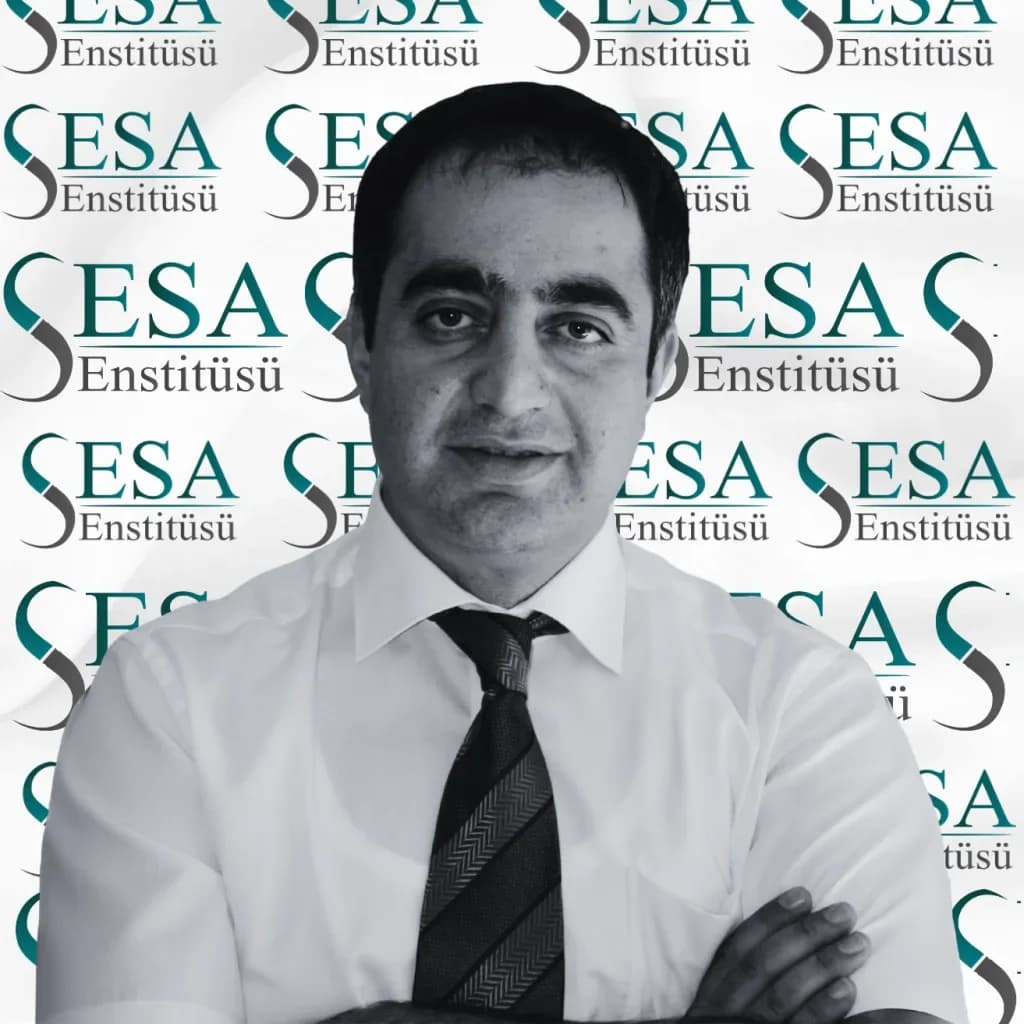
Prof. Veysel Ayhan
Director of the SESA Institute